Office Clearance in Blackfriars
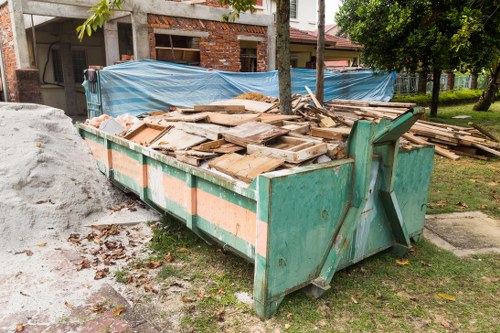
We provide office clearance in Blackfriars for businesses that need desks, chairs, filing cabinets, IT items and mixed office contents removed with care. The service is designed for workplaces that want a straightforward way to clear out redundant items while keeping the process orderly and controlled. Whether you are reducing floor space, replacing furniture or emptying an entire suite, our approach is centred on practical removal, sensible sorting and a finish that helps the premises move on cleanly.
Clearance work in an office setting often involves more than lifting furniture. It can include dismantling larger pieces, separating reusable items from general waste, and handling rooms that contain a blend of archives, equipment and fixtures. Our commercial clearance approach is built around that mix of contents, so the work can be matched to the layout and the amount that needs to go. If you are comparing options, clear descriptions of what remains and what is to be removed make it easier to agree the right scope.
For a quote, send the main details of the office and the items to be cleared. If the work includes furniture, computer equipment, storage units or boxed files, a short inventory is usually enough to begin. You can also use our pricing and quotes information to understand how clearance requests are typically assessed before you decide how much you want removed.
Clearance work for occupied, vacant and changing offices
Office spaces change for many reasons, and clearance requirements vary just as widely. Some customers need a single room emptied before refurbishment, while others are dealing with a larger move-out and want the site ready for contractors, surveyors or new tenants. We can support clear-outs that focus on selected areas as well as fuller removals, always keeping the work tied to the items and rooms actually involved rather than creating unnecessary disruption elsewhere in the building.
Typical office contents may include workstations, pedestals, shelving, meeting tables, reception furniture, screens and general sundries. These items rarely all leave in the same way, so a careful plan matters. Heavy or awkward pieces may need to be dismantled, while lighter items can be removed more quickly once they are sorted. Our job is to make the clearance practical and systematic, with each load handled in a way that suits the site and the contents.
When you are ready to move forward, a brief description of the layout and the items involved helps us shape the work properly. Two or three photographs can also clarify access, stairways or lift use, but they are not the only way to start. If you prefer to check the broader service first, our office clearance page gives a focused overview of the main work we carry out.
What an office clearance can include

An office clearance can involve individual items or a wider mixture of furnishings and loose materials. A practical service needs to handle the contents that are visible as well as anything stored in cupboards, under desks or in back rooms. We work through the agreed areas in an organised sequence, so the space is cleared without leaving random items behind or creating avoidable confusion about what has been removed.
Common items in this type of clearance often include desks, task chairs, conference seating, pedestal drawers, bookcases, cabinets, shelving, partition pieces and reception furniture. There may also be small electrical items, boxes of paperwork, packaged office stock and old décor pieces that are no longer needed. Where larger items are involved, the clearance may require safe disassembly before lifting and removal.
If your office contains mixed contents, it is usually best to separate anything that must stay from the items to be cleared. That makes the task simpler and avoids mistakes. For larger changes, our home clearance and house clearance pages show other removal options we offer for different property types, while this service remains focused on commercial offices and workplace contents.
Furniture, fixtures and bulky items
Much of the effort in an office clearance comes from furniture and other bulky contents. Large desks, storage units and tables can be awkward to move through corridors or around fitted items, so the clearance has to be paced to the building. We look at access points, door widths, stairways and lift use where relevant, then work methodically so that the move-out stays manageable and the premises remain as orderly as possible during the process.
Furniture items may need to be taken apart before they are carried out, especially where they are too large to move intact or where the route out is tight. That can apply to modular desks, meeting tables, cabinets or shelving systems. Careful handling also matters with items that include glass, laminate surfaces or metal frames, because these can chip or bend if they are shifted roughly. Our aim is simple: remove the pieces that need to go without creating avoidable damage.
For related furniture removals, you can also review our furniture clearance and furniture disposal pages. They help explain how individual items and wider furniture collections can be dealt with when an office no longer needs them, whether you are updating a small workspace or stripping out a whole suite.
Paperwork, equipment and items that need a careful sort

Office clearances are rarely only about furniture. Workplaces often contain files, archive boxes, old stationery, monitors, printers, cables and mixed equipment that needs attention before anything is taken away. These contents can call for a more measured approach, because some items may be reusable, some may need to be separated for disposal and some may be retained by the business. We therefore work from the agreed instructions and keep the removal focused on the items marked for clearance.
Where paperwork or archive material is present, the key question is usually what should stay and what should leave. That is especially important in offices that are being emptied in stages, where there may still be active records on site. A tidy sort before the removal begins saves time later and reduces the risk of anything being handled incorrectly. If you need to clear several room types at once, it is often helpful to identify which areas contain storage, which contain desks and which contain miscellaneous items.
Our broader removal pages, including waste removal and business waste removal, may be useful if your requirements go beyond a single office room. They cover different kinds of general clearance work, while office clearance remains the best fit for workplace furniture, contents and associated items.
How the work is organised on site
Every office has its own layout, so the clearance sequence should follow the building rather than a fixed pattern. In a compact suite, the work may begin with the items nearest the exit and move inward. In a larger office, it can be better to start with shared areas, then deal with individual rooms, storage and any secondary spaces. That kind of ordering helps the site stay intelligible while the work is under way and reduces the chance of items being left in the wrong place.
A sensible plan usually includes a clear distinction between items to remove and items to retain. A single point of contact from your side can be helpful, especially when the work involves multiple rooms or different departments. It is also worth making sure that access arrangements are understood in advance, such as lift times, security procedures or any building restrictions that affect when and how items can be moved. These simple steps keep the job focused and avoid delays.
Before the visit, it can help to group items that are definitely part of the clearance and make any essential access notes ready. The service is easier to plan when the furniture, files and loose contents are visible and the agreed scope is clear. If you are also reviewing broader business property services, our about us page gives a general company overview, while the office clearance service stays centred on the practical removal work itself.
About Blackfriars
Blackfriars sits on the north bank of the River Thames in central London and is known for its strong links to the City and the wider river corridor. The area takes its name from the Dominican friary established in the 13th century, and the monastic past still shapes local references today. Blackfriars Bridge and Blackfriars railway station give the district clear transport identity, while the river frontage places it within one of London’s most recognisable stretches of waterfront. The station itself is notable for spanning the Thames, with platforms and pedestrian connections that reinforce the area’s cross-river character. Nearby streets connect to Fleet Street, Ludgate Hill and the City core, so the neighbourhood has long sat at a busy meeting point between commercial, civic and historic London. Much of the built environment reflects this layered history: modern office buildings stand alongside older church fabric, including the surviving remains associated with the Blackfriars Priory site. The district also borders the City Thameslink corridor and lies close to cultural and legal landmarks such as the Royal Courts of Justice, St Paul’s Cathedral and the riverside walkways that draw pedestrians through central London. Although Blackfriars is compact, it carries a distinct identity shaped by river crossings, transport routes, historical institutions and the changing skyline around the Thames.
Clearing offices with different levels of complexity
Some clearances are straightforward and consist mainly of a few desks, chairs and storage units. Others are more involved because the office contains mixed material, built-in pieces or items that have been accumulated over time. The work needs to be adjusted accordingly. A straightforward clear-out can often be planned quickly, while a fuller job may call for more sorting, more lifting and more attention to the order in which rooms are approached.
Where an office contains fitted items or awkward objects, the removal plan may need to account for ceilings, corners, narrow access or shared corridors. This is especially important in older buildings and multi-tenant properties, where movement routes are often limited. We take a practical view of the site and work with the space that is actually available. If certain items need to be dismantled before removal, that is built into the process rather than treated as an afterthought.
Useful preparation is usually simple: separate the items to be removed, make note of anything that stays, and flag any access issues before the work begins. If you would like to compare another removal route, our garage clearance and loft clearance pages show how different kinds of spaces are handled when contents need to be sorted and taken away.
Pricing factors and quotation details

Quotation requests for office clearance are usually shaped by a few practical factors rather than by a single fixed formula. The amount of furniture, the type of contents, the ease of access and the number of rooms involved all influence the scope. A small office with a few surplus desks is very different from a full floor that contains storage, equipment and miscellaneous items, so the price discussion needs to reflect the actual work rather than a broad guess.
It is also important to know whether the clearance is selective or complete. If only certain items are going, the job may be more focused than an entire strip-out. If the office is being emptied ahead of a change of use, the work may be wider and take place in stages. Sharing a rough item list, the number of rooms and any constraints on access usually gives enough context for a meaningful quotation to be prepared. Clear scope notes are often the most useful starting point.
For the next step, you can ask for a quotation in plain language and include the main rooms, furniture types and any dates that matter. If you want to review our general service pages first, the contact us page is the place to make an enquiry once you are ready to move ahead with the office clearance.
Recycling, reuse and responsible removal
Not everything taken from an office has the same end point, so a sensible clearance should separate items wherever possible. Some furniture may still be suitable for reuse, while other materials may be better directed into appropriate waste streams. Office contents can include wood, metal, plastics, textiles and electrical components, and those different material groups should not all be treated in the same way. Careful sorting helps the work remain organised and supports better overall handling of the items removed.
Workplace clearances also need to consider what should happen to smaller contents such as accessories, paper items and cables. These can easily become mixed together if the job is rushed, which makes later sorting harder. When the clearance is planned with care, the removal can be more orderly from the beginning. That is especially useful in offices where there are multiple people involved in vacating the space and several categories of contents to manage.
If your project involves other kinds of premises or a wider waste handling requirement, the recycling and sustainability page gives a broader look at how materials are considered after removal. It sits alongside the service pages rather than replacing the need for a properly scoped office clearance.
Choosing the right scope for your office

Some customers only need one department cleared, while others want a whole office emptied before handing back the keys. Choosing the right scope matters because it sets the pace of the job and avoids confusion about what is included. It may be enough to remove surplus furniture and a few stored items, or it may be more practical to clear all visible contents from one or more rooms. The service can be shaped to either approach so long as the items are identified clearly.
It is also worth considering timing within the building. Offices may need to remain partially in use while a clear-out takes place, or they may be completely vacated at the point the work starts. Both situations can be managed, but each needs a slightly different order of operations. Where there are shared corridors, reception areas or meeting rooms, it helps to know in advance how the clearance should interact with the rest of the premises.
When you are ready, request a quotation with the room count, item types and any access notes. For a straightforward next step, use the contact route and ask for office clearance in Blackfriars so the job can be considered against the actual contents and layout.