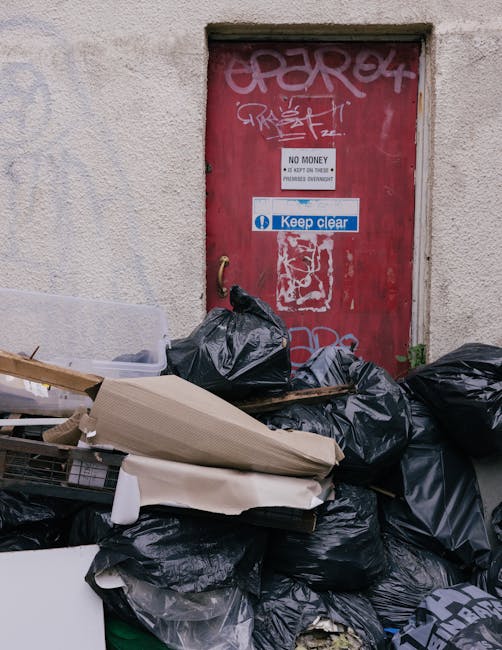
Dealing with fly-tipping outside Fleet Street, Blackfriars
If you have spotted dumped rubbish, broken furniture, black bags, or builder's waste outside Fleet Street in Blackfriars, you are probably dealing with more than an eyesore. Fly-tipping can block pavements, attract pests, create trip hazards, and make a busy central London street feel a bit off before the day has even properly started. Truth be told, in an area like this, the knock-on effect can be immediate: pedestrians squeeze past, shopfronts look untidy, and nearby businesses end up carrying the stress.
This guide explains Dealing with fly-tipping outside Fleet Street, Blackfriars in a practical, calm way. You will learn what to do first, how the process normally works, what to avoid, how to stay on the right side of local expectations, and when it makes sense to bring in professional help. If you need a broader service route later, you may also find it useful to look at fly-tipping clearance support, rubbish removal in London, or commercial waste removal depending on the scale of the mess.
Let's face it: nobody wants to spend the morning standing beside a pile of dumped waste on a pavementside by a road like Fleet Street. But with the right approach, you can deal with it quickly, safely, and without making the situation worse.
Table of Contents
- Why Dealing with fly-tipping outside Fleet Street, Blackfriars Matters
- How Dealing with fly-tipping outside Fleet Street, Blackfriars Works
- Key Benefits and Practical Advantages
- Who This Is For and When It Makes Sense
- Step-by-Step Guidance
- Expert Tips for Better Results
- Common Mistakes to Avoid
- Tools, Resources and Recommendations
- Law, Compliance, Standards, or Best Practice
- Options, Methods, or Comparison Table
- Case Study or Real-World Example
- Practical Checklist
- Conclusion
- Frequently Asked Questions
Why Dealing with fly-tipping outside Fleet Street, Blackfriars Matters
Fly-tipping is not just "someone's left a bit of rubbish." It is illegal dumping, and in a central London location it can quickly create a chain reaction of problems. Fleet Street and the surrounding Blackfriars area are busy, tightly used streets where pedestrians, deliveries, cyclists, and commercial traffic all share limited space. A mattress or stack of bags dumped by a kerb can obstruct movement in a way that feels minor on paper but annoying in real life.
There is also the visual impact. A clean frontage says something about a building, a business, and the street itself. A fly-tipped pile of waste does the opposite. It can make visitors hesitate, make staff feel unsafe at the end of the day, and prompt more careless dumping if it is left too long. That "broken window" effect is real enough in practice even if people do not call it that in everyday conversation.
On a practical level, the risk is wider than appearance. Fly-tipped waste may contain sharp objects, broken glass, damp cardboard, chemicals, or contaminated items. Sometimes it smells. Sometimes it is heavy and awkward. Sometimes it is tucked partly into the road, which means a quick visual check is not enough. A sensible response protects people first and speeds up the clean-up after that.
If you manage property nearby, a shop unit, office, or mixed-use building, dealing with the issue promptly also helps with landlord relations, tenant experience, and day-to-day operations. If you are running a business, it can be a very unglamorous task, yes, but one that quietly protects your reputation. Small thing, big effect.
Expert summary: In a location like Blackfriars, the best response is usually fast reporting, a proper safety check, and a clear plan for removal. The aim is not just to "make it disappear" but to remove it safely, document it properly, and reduce the chance of it happening again.
How Dealing with fly-tipping outside Fleet Street, Blackfriars Works
The process usually starts with identifying what has been dumped and who controls the land. That sounds obvious, but it matters. If the waste is on a public pavement or the carriageway edge, the local authority may be involved. If it is on private land, the property owner, managing agent, or occupier often has to arrange clearance. Sometimes the boundary is messy, which is very London, isn't it? A few metres can make all the difference.
From there, the sensible route is usually:
- Check the area for immediate hazards.
- Photograph the waste from a safe distance.
- Note the exact location and time discovered.
- Report it to the relevant party if needed.
- Arrange removal through the appropriate channel.
- Make sure the waste is handled and disposed of correctly.
That may sound simple, but the detail matters. For example, if the waste contains potential hazardous items such as paint tins, chemicals, needles, or suspected asbestos-containing materials, the job changes completely. You should not just bag it up and hope for the best. A professional team with the right equipment and waste handling process is the safer route.
If you are arranging clearance as part of a broader property issue, it can help to think in terms of service layers. Some cases need a one-off removal. Others need recurring support, especially if a site has regular dumping pressure or a poorly secured rear access point. In those situations, combining clearance with ongoing waste management can be much more effective. You may also want to review area clearance services and waste management support if the problem is broader than a single pile on the pavement.
There is a human side to all this too. Most people do not notice fly-tipping until they step out the door and there it is: a black bag split open, a broken chair, maybe a half-soaked carpet leaning awkwardly against a wall. That little jolt of annoyance is exactly why a structured response works better than a rushed one.
Key Benefits and Practical Advantages
Handling fly-tipping properly gives you more than a clear pavement. It reduces risk, saves time later, and protects the image of the property or street. In a place as visible as Fleet Street, that matters.
- Safer walkways: Waste is removed before someone trips, slips, or cuts themselves.
- Cleaner appearance: The frontage looks cared for again, which is especially important for customer-facing premises.
- Lower pest risk: Food waste and damp rubbish can attract vermin surprisingly quickly.
- Better compliance: Waste is more likely to be moved and disposed of properly when handled by a proper route.
- Less repeat dumping: A prompt clean-up can discourage others from using the same spot.
- Reduced disruption: Staff, visitors, and deliveries can carry on with less fuss.
Another benefit that is often overlooked is record-keeping. When you deal with the issue carefully, you create a useful trail: photos, times, contact notes, and disposal confirmation where relevant. If the problem keeps happening, that record helps you spot patterns. Same time of day? Same access route? Same type of waste? Those details can be the difference between a one-off nuisance and a solvable issue.
To be fair, the value is not always dramatic. Sometimes it is just one less thing to worry about on a busy morning. But in central London, small wins count. A lot.
Who This Is For and When It Makes Sense
This topic matters to quite a few people, not just property managers. If you are in or near Blackfriars and you have responsibility for a building, frontage, or shared access area, you may need a plan for fly-tipping sooner or later.
- Business owners: Shops, cafes, offices, and hospitality premises with public-facing entrances.
- Landlords and managing agents: Especially where waste appears at side passages, rear yards, or communal access points.
- Facilities teams: People who need to respond fast without disrupting operations.
- Concierges and security staff: Often the first to spot a problem in the early morning.
- Residents and occupiers: If dumped waste is affecting access to flats or shared spaces.
- Contractors and cleaners: Those tasked with keeping a site presentable and safe.
It makes sense to act quickly when the waste is blocking access, smells strongly, looks hazardous, or is attracting more dumping. It also makes sense when you simply do not want the issue hanging around all day. In busy commercial streets, delays tend to multiply the inconvenience.
If you are unsure whether the site is public or private, that is a good point to pause and check. Guessing wrong can waste time. If the situation is part of a bigger clean-up, you might also need office clearance, property clearance, or end of tenancy clearance services depending on what has been dumped and where.
Step-by-Step Guidance
If you want a calm, workable approach, start here. Nothing fancy. Just the practical order that tends to work.
1. Make the area safe
Before you touch anything, look for hazards. Broken glass, sharp metal, leaking liquids, syringes, chemical containers, or unstable piles are all reasons to keep your distance. If the waste has spread into the road, consider whether traffic or pedestrians are being affected. Safety first. Always.
2. Take clear photos
Photos help with reporting, insurance, internal records, and repeat-incident tracking. Take them from different angles and include enough context to show the exact location. Do not stand in the road if you do not need to. A quick picture from the pavement is usually enough.
3. Identify the type of waste
Is it household rubbish, office waste, builders' rubble, furniture, mixed refuse, or something that may be hazardous? Different waste types may need different handling. For example, bulky waste and mixed rubbish are usually straightforward for a clearance team, while suspected hazardous waste needs a more careful process.
4. Check who is responsible for the site
If the waste is on private land, the owner or occupier usually needs to arrange removal. If it is on the public highway or pavement, the route may involve reporting rather than direct removal by the occupier. In mixed-use London streets, that boundary is not always obvious, so a quick check with building records or property management helps.
5. Arrange the right removal method
For small, non-hazardous loads, a straightforward collection may be enough. For larger or more awkward loads, especially where access is tight, a team with proper lifting and loading equipment can make the job much smoother. Heavy bags, old fixtures, and damp cardboard are deceptively awkward, especially when they have been sitting out in the weather for a bit.
6. Confirm disposal is compliant
Waste should be transported and disposed of through lawful, documented channels. That is not just a box-ticking exercise. It protects you if the waste is later traced incorrectly or if questions come up about duty of care.
7. Prevent the next incident
Once the site is clear, look at why it happened. Was there easy access from the rear? Poor lighting? A missing bin lid? Too little collection capacity? Sometimes a simple fix prevents a repeat. Sometimes not. But it is worth checking before the memory fades.
Expert Tips for Better Results
Here is where a bit of experience helps. Over the years, the jobs that go smoothly usually have a few things in common.
- Act early in the day: Morning removal often causes less disruption, especially in a busy district.
- Separate known materials: If safe to do so, keep bulky furniture away from loose rubbish. It speeds up handling.
- Do not compress unknown waste: Never press bags down or move hidden contents if you cannot see what is inside.
- Use the right access route: Tight alleyways and rear service entries can change the whole job plan.
- Keep a simple incident log: Date, time, what was found, and any photos. Boring? Maybe. Useful? Absolutely.
- Think prevention as well as clearance: A locked gate, better lighting, or clearer waste storage can reduce repeat dumping.
A small but useful tip: if you manage multiple premises, create one simple internal reporting route. One person spots the waste, one person logs it, one person decides whether it needs urgent action. That stops the "I thought someone else was handling it" problem. We have all seen that happen. Not ideal.
If you need ongoing support for a business premises, you may also want to review business waste collection and site clearance options. Those services can be especially helpful where fly-tipping is happening alongside general clutter or renovation debris.
Common Mistakes to Avoid
Most problems with fly-tipping response come from haste, not bad intentions. A few common mistakes show up again and again.
- Moving unknown hazardous waste by hand: This is the big one. If you do not know what it is, do not assume it is harmless.
- Leaving it "until later": In a busy area, later often becomes tomorrow, and tomorrow becomes a bigger issue.
- Using the wrong waste contractor: Cheap does not always mean lawful or reliable. Make sure the job is handled properly.
- Ignoring recurring hotspots: If the same place keeps getting dumped on, you need a prevention plan, not just repeated clean-ups.
- Assuming the council will handle every case: That depends on location and ownership. Check before you wait.
- Not documenting the waste: If the issue comes back, evidence helps.
There is also a subtler mistake: treating fly-tipping as only a tidying job. It is partly that, yes, but it is also a site-safety and property-management issue. Once you see it that way, the response gets sharper and more effective.
Tools, Resources and Recommendations
You do not need a truck full of specialist gear to respond well, but a few practical tools make life easier.
| Tool or Resource | Why It Helps | Best Use |
|---|---|---|
| Phone camera | Creates a quick record of the waste and location | First response and reporting |
| Gloves and protective footwear | Reduces injury risk if any handling is required | Light, safe contact only |
| Barrier tape or temporary signage | Warns people away from unsafe waste | When the pile affects access |
| Incident log | Tracks repeat dumping and response times | Property management and trend spotting |
| Approved waste removal service | Ensures lawful collection and disposal | Bulky, mixed, or urgent clearances |
A few recommendations are worth keeping in mind:
- Choose a service that can handle mixed loads if the waste is not neatly separated.
- Ask how disposal is managed, especially if you are responsible for a site record.
- For commercial properties, make sure the team understands access constraints, loading times, and nearby pedestrian flow.
- If the waste appears contaminated or dangerous, stop and get specialist guidance before touching it.
If your situation is part of a larger clean-up after refurbishments or a tenant move-out, house clearance and garage clearance pages may also be relevant, depending on the type of items dumped.
Law, Compliance, Standards, or Best Practice
Fly-tipping sits within a broader waste-duty framework in the UK, and while this article is not legal advice, the practical principle is straightforward: waste should be handled responsibly, traced properly, and not passed on to someone who cannot lawfully deal with it. If you are commissioning removal, it is wise to use a reputable provider and keep records of what was taken and when.
For businesses and managing agents, best practice usually means:
- keeping a clear incident record;
- using lawful waste carriers and authorised disposal routes;
- separating hazardous materials where required;
- training staff to spot and report dumping early;
- reviewing how waste is stored on-site to reduce repeat incidents.
If you are not sure whether an item is regulated or potentially hazardous, err on the cautious side. For example, old paint, solvent containers, electrical items, and construction waste can all need extra care. A quick decision can save a much bigger headache later. In our experience, that is where people are most likely to slip up.
Best practice also means being realistic about access. Blackfriars streets can be tight, busy, and time-sensitive. A removal team that understands loading windows, pedestrian congestion, and the need to work neatly can make a noticeable difference. No drama. Just a clean job done properly.
Options, Methods, or Comparison Table
Different situations call for different approaches. Here is a simple comparison that may help you decide what is sensible.
| Method | Best For | Pros | Limits |
|---|---|---|---|
| Report and wait for public clearance | Waste on public land or where the authority is responsible | May be appropriate and cost-efficient | Timing can vary; not ideal for urgent access issues |
| Manual removal by site staff | Very small, safe, non-hazardous items | Quick if straightforward | Risky if waste is sharp, heavy, or contaminated |
| Professional fly-tipping clearance | Bulky, mixed, or awkward waste; private land; urgent jobs | Safer, faster, more controlled | Requires booking and may cost more than a basic tidy-up |
| Ongoing waste prevention plan | Recurring dumping hotspots | Reduces repeat incidents | Needs review and consistent follow-through |
For many Fleet Street and Blackfriars properties, the professional route is the most sensible when the waste is bulky, time-sensitive, or mixed. That is especially true where front-of-house image matters. A row of passers-by in the morning will notice the mess long before they notice the effort it took to remove it.
Case Study or Real-World Example
Imagine a small office entrance just off Fleet Street on a Monday morning. Overnight, someone has dumped two black sacks, a broken desk chair, a flattened cardboard pile, and a stained carpet roll near the service access. It is not huge, but it is enough to block part of the path and make staff step around it in a line. You can almost feel the frustration before the kettle has even boiled.
The facilities lead takes a few photos, checks that nothing looks hazardous, and confirms the waste is on private property. Rather than ask cleaners to improvise, they arrange a proper collection. The team removes the waste, sweeps the area, and logs what was collected. Later that week, they notice the same access point is still easy to reach after hours. A simple lock upgrade and better lighting reduce the chances of another dump.
What made the difference was not just removal. It was the order of the response: safe check, documentation, proper clearance, then prevention. Small process, big payoff.
Practical Checklist
Use this quick checklist if you are dealing with dumped waste outside a property near Fleet Street or Blackfriars.
- Have you checked the area for glass, sharps, liquids, or other hazards?
- Have you taken photos from a safe distance?
- Do you know whether the waste is on public or private land?
- Have you identified the likely waste type: household, bulky, commercial, or hazardous?
- Have you informed the right internal contact or property manager?
- Have you decided whether the waste needs urgent removal?
- Have you chosen a lawful removal route?
- Have you kept a record of what was found?
- Have you checked whether repeat dumping is a possibility?
- Have you taken one prevention step after clearance?
Practical takeaway: the fastest fix is not always the best fix. The best result usually comes from a careful first look, a proper collection plan, and one small prevention change afterwards.
Conclusion
Dealing with fly-tipping outside Fleet Street, Blackfriars is one of those jobs that looks simple until you are actually standing there with a blocked pavement, a tight schedule, and a pile of waste that should never have been dumped in the first place. The good news is that a sensible process makes it manageable: stay safe, document what you see, choose the right removal route, and think about prevention once the area is clear.
If you are responsible for a building, business frontage, or shared access point, do not wait for the problem to grow legs. A prompt, well-handled response saves time, reduces risk, and keeps the area looking like it should. And in a place as visible as Blackfriars, that matters more than people sometimes admit.
Get a free quote today and see how much you can save.
Sometimes the difference between a stressful morning and a calm one is simply having the right plan in your back pocket. A clean street, a clear entrance, and a job done properly - that's a decent outcome, really.
Frequently Asked Questions
What counts as fly-tipping outside Fleet Street, Blackfriars?
Fly-tipping is the illegal dumping of waste, whether it is one black bag, broken furniture, building debris, or a larger mixed pile. If it has been left where it should not be, and there is no proper disposal route behind it, it may count as fly-tipping.
Who is responsible for clearing fly-tipped waste?
Responsibility depends on where the waste is located. On private land, the landowner or occupier usually needs to arrange clearance. On public land, the local authority may be involved. If the boundary is unclear, check it before acting.
Should I move fly-tipped waste myself?
Only if it is small, safe, and clearly non-hazardous. If there is any chance of sharp objects, chemicals, contamination, or heavy awkward items, it is safer to leave it and arrange proper removal.
How quickly should fly-tipping be removed?
As quickly as practical, especially if it blocks access, creates a safety issue, or affects a visible frontage. In a busy area like Blackfriars, a delay can make the problem look worse and can even encourage more dumping.
Can fly-tipping attract pests?
Yes. Food waste, damp cardboard, and mixed rubbish can attract rats, insects, and other pests, particularly if the waste sits outside for too long. That is one reason fast action matters.
What if the dumped waste looks hazardous?
Do not handle it. Keep people away if needed and arrange a careful assessment or specialist removal route. Hazardous materials need more caution than ordinary household or bulky waste.
Is it better to report fly-tipping or arrange private removal?
That depends on where the waste is and who owns the land. If it is on private property and affecting your site, private removal may be the fastest route. If it is on public land, reporting may be the right first step.
How can I stop repeat fly-tipping?
Look for the reason the site is being targeted. Common fixes include better lighting, locked access, clearer waste storage, quicker clean-up after incidents, and better internal reporting. There is rarely just one answer, but small changes can help a lot.
Do I need records when fly-tipping is cleared?
Yes, if you manage a business or property. Photos, dates, notes on waste type, and collection details help with accountability and can be useful if the issue returns.
What is the safest first step when I find dumped waste?
Stop and assess the area from a safe distance. Do not assume the waste is harmless. Take photos, check for hazards, and decide whether it needs professional attention. That first minute matters more than people think.
Can one small fly-tip turn into a bigger problem?
Absolutely. One pile left untouched can become a magnet for more rubbish. In streets with regular foot traffic, a neglected spot can start looking like an acceptable dumping point, which is exactly what you want to avoid.
When should I book a professional clearance service?
Book one when the waste is bulky, mixed, heavy, urgent, or possibly hazardous, or when the location is too awkward for a safe in-house clean-up. If the issue is recurring, professional help can also save time and reduce repeat disruption.